

Von Neanderthal Museum
EXHIBITION TEXT READER
The numbers in this reader correspond to the numbered exhibition texts.
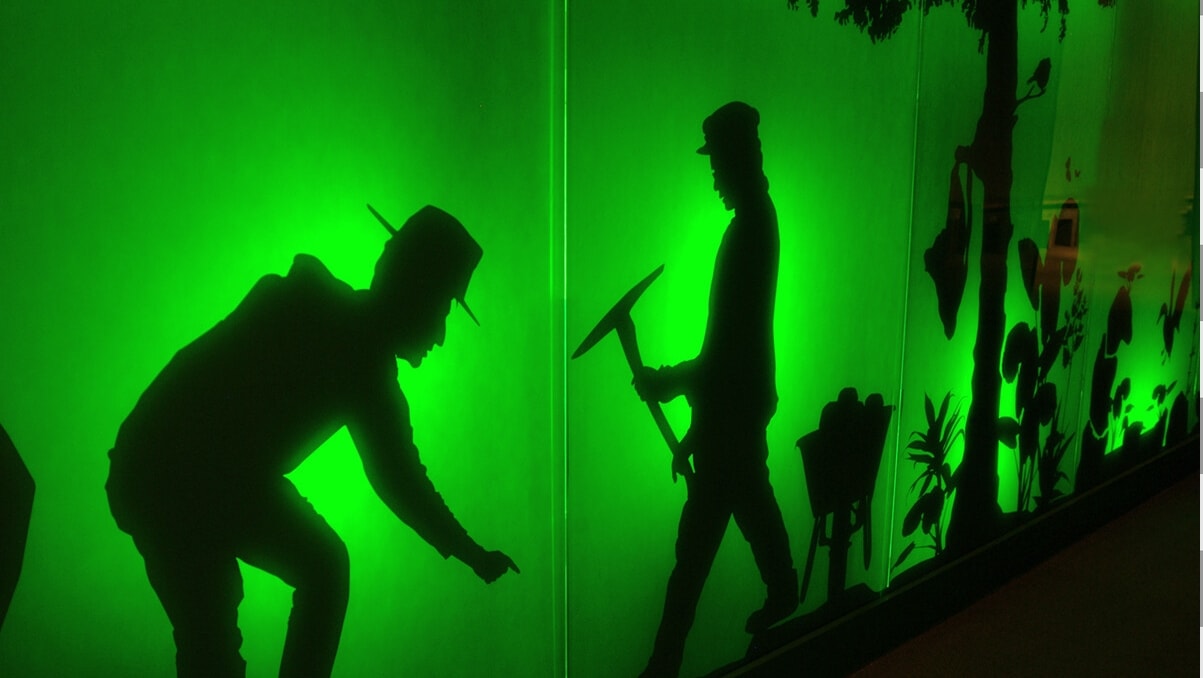
Has the valley always looked the way it does today?
What did workers find here in 1856?
Why did a few bones become a sensation?
Once, the Neander Valley was a wild, almost fairytale-like rocky gorge. Steep limestone cliffs rose high above the valley, dense greenery covered the slopes, and the River Düssel rushed through the narrow ravine.
It was a landscape that amazed visitors and inspired artists.
In the 19th century, this beauty attracted painters and nature lovers. But with limestone quarrying, its destruction began: within just a few decades, the impressive rocky landscape was almost completely destroyed.
Since 1921, parts of the valley have been protected as a nature reserve. Today, the Neander Valley is an important habitat for animal and plant species, and a place where its lost beauty can only be imagined.
The Neanderthal bones were discovered by chance. In August 1856, workers shoveled them out of the clay of the Feldhofer cave. Johann Carl Fuhlrott later described the skeleton as lying stretched out on its back, with its head facing the cave entrance. The Neanderthal probably had been buried here.
But limestone quarrying destroyed the cave, and its exact location was forgotten. It was not until 1997 and 2000 that archaeologists rediscovered the site. Beneath the limestone rubble, they found cave clay, tools, animal bones, and further human fragments. These show that bones of another Neanderthal individual, probably a female, had also lain here. A child’s tooth suggests that a child had once been in the cave as well.
Today, the Höhlenblick Tower marks this special place.
The bones from Neander Valley did not fit into the worldview of the 19th century. Fuhlrott saw them as remains of an ancient human being, older than anything people at the time had thought possible. His interpretation was more than a scientific theory. It turned the order of the world upside down.
At the time, humans were seen as unchanging: created in the image of God, as the crown of creation and unique among all living beings. The idea that other human forms could have existed before us was world-shattering. It challenged humanity’s special position.
A little later, Charles Darwin expanded this perspective with his theory of evolution. Humans no longer stood above nature. They became part of a long history of change, kinship, and evolution.
Thus, the discovery of 1856 became a key moment in science, and the Neander Valley became the cradle of palaeoanthropology.
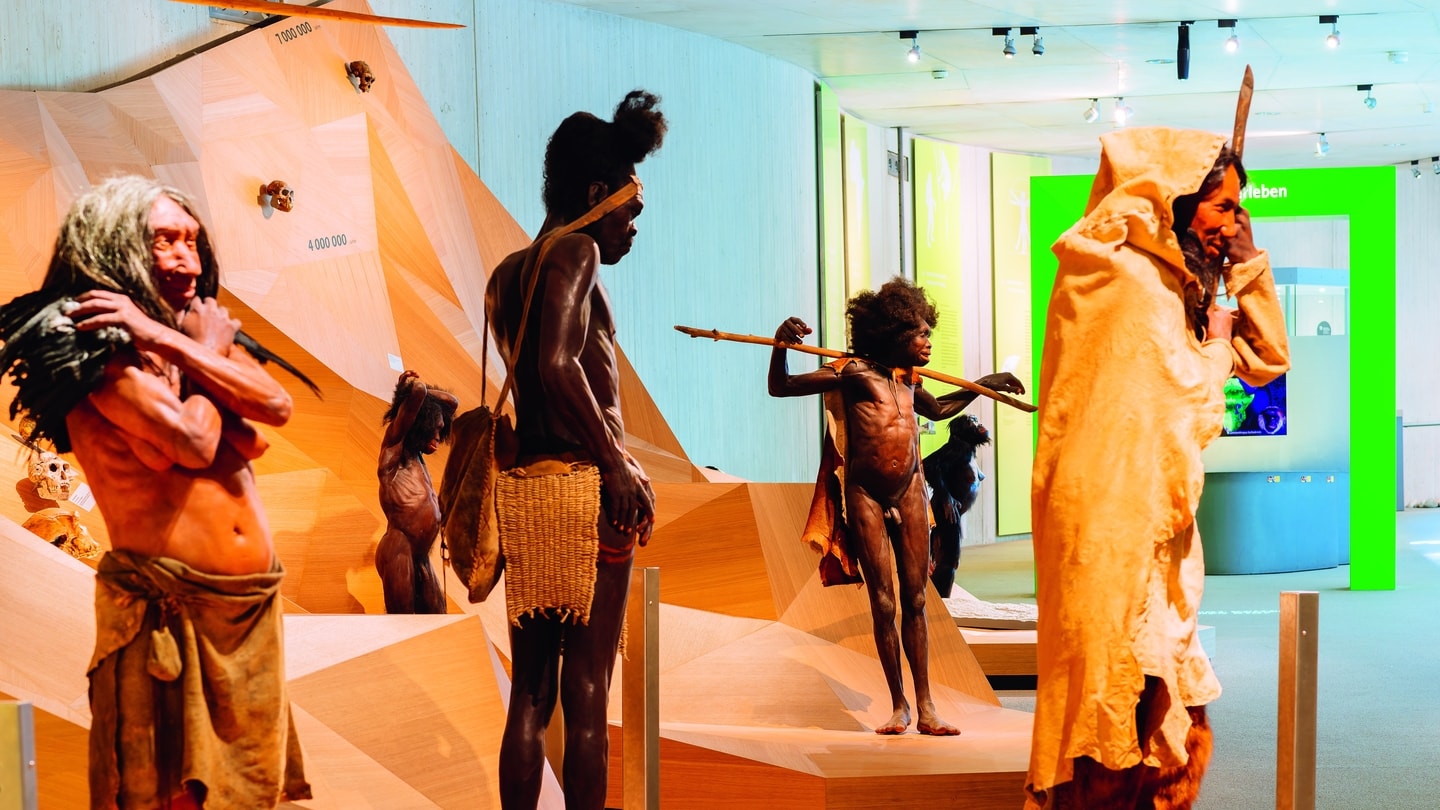
What makes us human?
When did humans first appear?
How old is the planet we live on?
Have we always been alone on Earth?
The progression of life and its changes takes place over spaces in time which are barely comprehensible to humans. This was something even Charles Darwin was already aware of: “The consideration of these facts impresses the mind almost in the same manner as does the vain endeavour to grapple with the idea of eternity.“ (From: “The Origin of Species”)
It has only been a little over 100 years since we have an idea of how old the world really is, since when life has existed on our planet and how short in comparison the existence of humans and their fossil ancestors is.
Today we are the only human species on Earth. This is an evolutionary exception. Until the Neanderthals became extinct there was always more than one hominin species.
The fossil finds from which our evolutionary history can be reconstructed are rare. Some species are only known from individual bones, some only from DNA traces. Instead of a family tree, our evolution is today thought of as a wide river, which can branch and form new streams that can later flow together once more. Human evolution is not a directed process, but rather the result of adaptation and chance.
Our ancestors were dark-skinned. Even then, there was a wide variety of dark skin colours. Thanks to palaeogenetics we now know that lighter skin was a late development. It evolved long after the time of the Neanderthals and the migration of early Homo sapiens into Europe.
Skin colours are adaptations to differing levels of solar radiation. The earliest hominins had light-coloured skin beneath their fur. As this fur was lost, darker skin evolved for protection against solar radiation.
In regions which receive less sunlight, lighter skin provides an advantage for the uptake of vitamin D. A diet including fatty fish and offal can also help ensure an adequate supply of vitamin D. For this reason our ancestors were able to live for a long time in regions with lower levels of sunlight without light-coloured skin.
Regardless of the spectrum of skin tones existing today, we all belong to a single species and we all share a common ancestry. The use of the term "race" in regard to humans stems from outdated ideologies. Animal races exist as a result of selective breeding, but human races do not exist.

How did the history of humankind begin?
What did the world of our ancestors look like?
What happened to the Neanderthals?
How did humans come to Europe?
The history of humanity began in Africa, and those beginnings were marked by changes in the natural environment. Between 9 and 7 million years ago, changes in the climate saw tropical rainforests shrink. Hominins moving about on two legs already ranged through the open lake and river landscapes.
From 3.5 to 2 million years ago, the climate in Africa became gradually cooler and drier, a process broken up by warmer phases. A variety of hominins evolved differing adaptations to the fluctuating living conditions. They lived on the savannah, in forests, in shore areas, and on the edges of forests. They ate grasses, fruits, tubers, or insects. Their differing adaptations were reflected in differing body forms.
Species undergo constant change: the parents' genetic material is remixed during every act of procreation.
Biologists call this process genetic recombination. It is responsible for the ongoing generation of new and unique specimens within species. This process is also accountable for changes to the genetic material itself: mutations too generate new species and varieties.
The better one of these new species is adapted to its environment, the greater are its chances of survival. It uses the available resources more efficiently, eats more nutritious food, and combats enemies more successfully. The most prosperous of these species generally have abundant offspring. As a result their hereditary features gradually become dominant.
Some 2.5 million years ago, the genus Homo arose and the history of humankind moved on with Homo habilis, the first human to make stone tools out of rocks. Homo erectus, the oldest remains of which found so far stem from 2 million years ago, already displayed typically human features. This species was intelligent, as its highly developed brain indicates. Its members could move easily on foot, and had grown considerably in stature. By contrast, their teeth had gotten smaller, and their body hair was starting to grow thin. Homo erectus made a range of tools from stone and wood and took meticulous care of their offspring. Homo erectus spread from Africa to Asia and Europe. Homo heidelbergensis evolved from them and the Neanderthals evolved from Homo heidelbergensis.
Anthropologists know a great deal about the Neanderthals (Homo sapiens neanderthalensis): more bones from Neanderthals have been found than from any other fossil human species. The skeleton of Neanderthal man differs from that of humans today (Homo sapiens sapiens).
For example, the Neanderthals had exceptionally powerful bones, something that suggests enormous muscular power. They had no dimples in their cheeks, which gave their faces a more pointed shape. Their brows jutted out over their eyes. Their jaws and teeth were also powerful. Their front teeth were often worn down, indicating that they may have been used as a "third hand". Their brain was bigger than ours.
We, Homo sapiens sapiens, originated around 300 000 years ago in Africa from the descendants of African Homo erectus. Equipped with great adaptive abilities, we set forth to settle the entire globe. As a result, in Asia and Europe we met distant relatives like the Neanderthals and the Denisovans, descendants of earlier emigrants from Africa. We arrived in Europe approximately 40 000 years ago. We lived as Ice Age hunters and gatherers, just like the Neanderthals. Their numbers had been heavily reduced due to the constant fluctuations between warm and very cold climatic phases. Our genetic make-up reveals that we also interbred with them. However, many regions were so thinly settled by Neanderthals, that we didn't always encounter each other. The first arrivals were forced back by the extreme Ice Age climate. It was only after the coldest period had passed that we stayed.
The climate has always influenced the living conditions of humans. During alternating warm and cold periods humans had to repeatedly adapt to changing environmental conditions.
Particularly severe were short-term climatic fluctuations during the last Ice Age, which led to extreme cold and aridity. Large parts of Europe were buried beneath ice and uninhabitable. Humans retreated to the south, west and east. For the Neanderthals, living in small groups, survival became ever more difficult. 40,000 years ago they became extinct. In the warming conditions at the end of the last Ice Age the large mammals of the mammoth steppe also died out.
Using a variety of methods researchers from all over the world reconstruct past climates and, in doing so, amass important information regarding the climatic trends of today. The climatic fluctuations of the Ice Ages cannot be compared to those of the present. Current climatic warming is being intensified and accelerated by human influence.
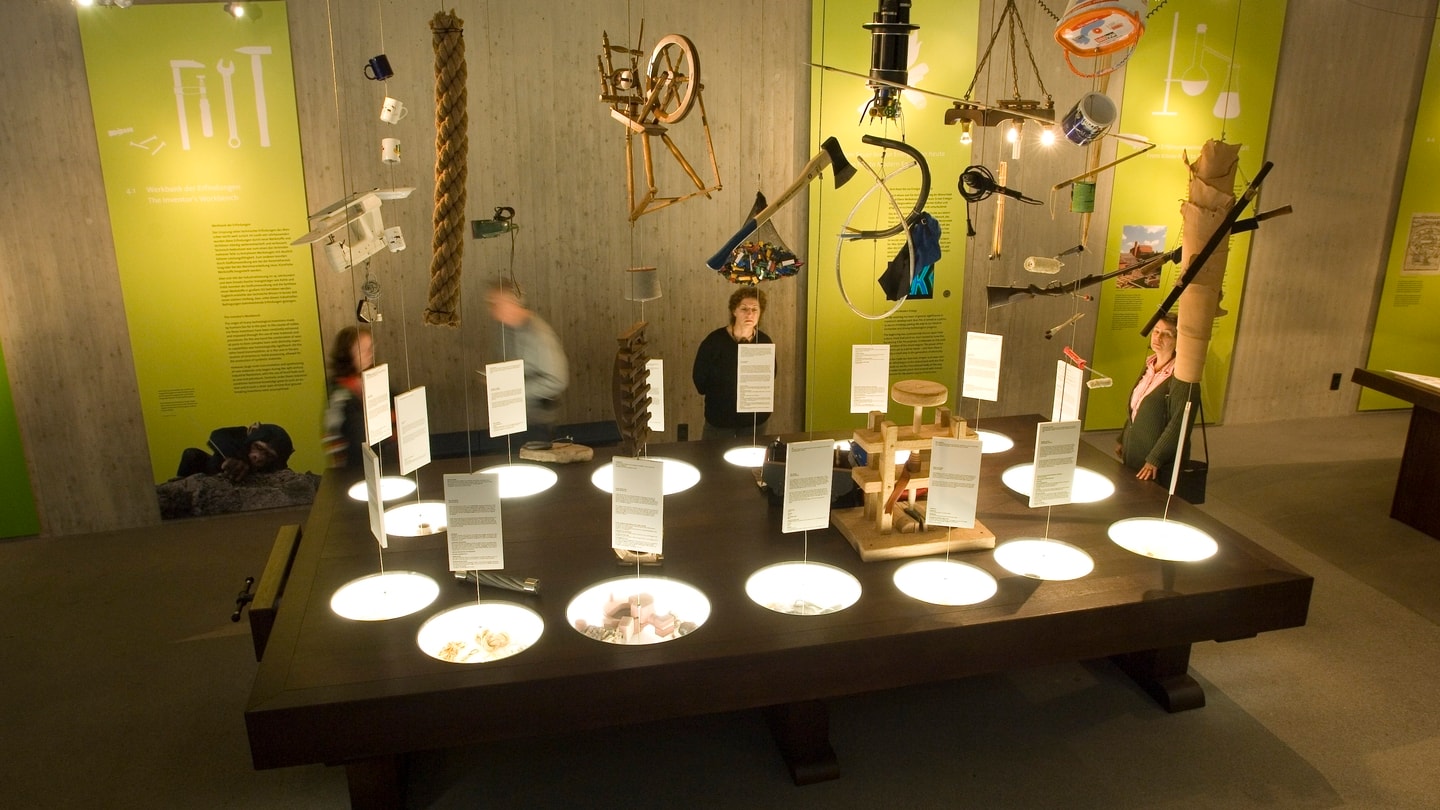
Are stone tools sharp?
Could Neanderthals make fire?
Can humans subsist without the use of metal?
Are humans the only ones who can use tools?
How did that hole get there?
The origin of many technological inventions made by humans lies far in the past. In the course of millennia, these inventions have been constantly enhanced and improved through the use of new materials and procedures. On the one hand, the combination of several parts to form complex tools with distinctly superior capabilities was technologically significant. On the other hand, transmutation, as is the case in the production of ceramics or metal processing, allowed for the production of synthetic materials.
However, large-scale transmutation and synthesizing of new materials only began during the 19th century Industrial Revolution, with the use of fossil fuels such as coal and petroleum. Similarly, under these industrial conditions technical knowledge grew to such an extent and in such a short span of time that groundbreaking inventions were accomplished.
The earliest signs of tools being used are approximately 3.3 million years old. At that time, the genus Homo did not exist. It was Australopithecines or Kenyanthropus that produced those tools. They could use them to kill animals or crack nuts. Stone tools were also used to manufacture other tools. This resulted in a constant process of manufacturing tools through the use of other tools. The foundation for our material culture had been laid.
Do tools make humans unique? Not quite. Many animals also develop remarkable solutions. Chimpanzees use sticks to fish for termites. Crows bend wire into hooks. Octopuses build shelters out of shells. They observe, experiment, and adapt their behaviour.
So, inventiveness does not begin with humans. But in humans, a good idea becomes something special: knowledge is shared, passed on and improved repeatedly. From simple tools come technologies, traditions and, eventually, culture.
What may look unremarkable at first glance was one of the most refined tools of the Palaeolithic: the stone drill. With pointed flint, people could pierce bones, teeth, shells or ivory. This is how pendants, beads, and other ornaments were made.
It took strength, patience and great skill. Through rotating movements, sand, or other abrasives, small and precise openings were created. Finds from the Geißenklösterle Cave in Germany show that, around 40,000 years ago, people already combined technical skill with symbolic expression. Tools were not only used for survival. They also helped make identity, belonging, and beauty visible.
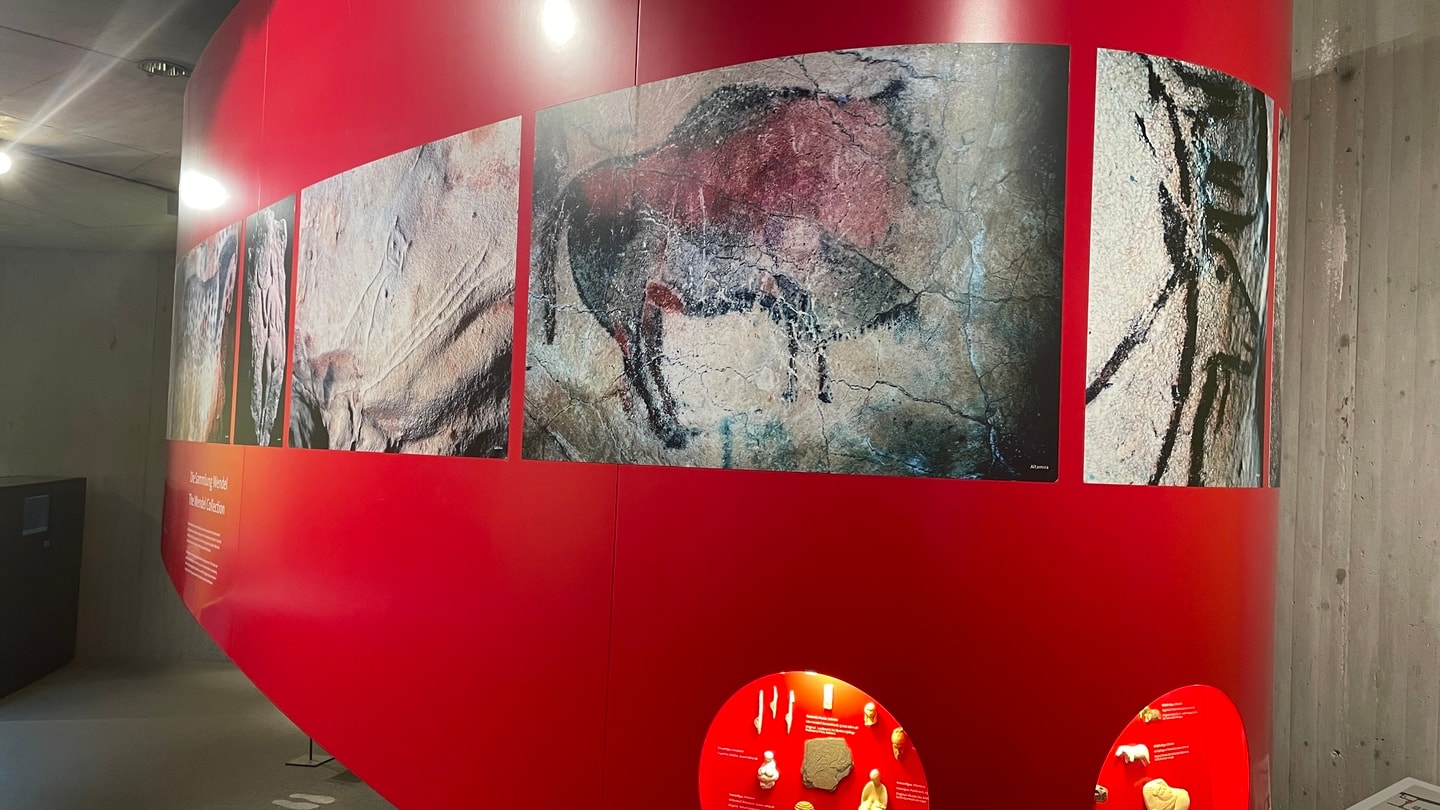
Do communities without myths exist?
Did Neanderthals bury their dead?
Are cave paintings the oldest works of art?
Who erected megalithic graves?
Are the world’s religions incongruous?
Humans have pondered the inception of the world and their own origins since time immemorial. The various interpretations have been set down in the sacred narratives forming part of every culture. In these versions of Creation, deities or superhuman beings form the world out of chaos, creating the sea, mountains, plants, animals - and finally humankind. These creation myths are passed down through the generations. They are literally accepted as the gospel truth and offer a means of orientation within a world perceived as overwhelming. Unlike modern theories on the "big bang" and evolution, these myths survive without the backing of scientific evidence. They are simply accepted for what they are.
Death makes us reflect upon being alive. It not only deprives individual people of life. It also leaves behind gaps in communities. Somebody loses their partner, children one of their parents, or a brother loses a sister. Rituals help us overcome these losses. When mourners gather after a funeral for a wake or meal, this strengthens the solidarity within a group. It sparks a process that is vital: the gap in the community needs to be closed and the social order restored.
As far as we know, the Neanderthals were the first people to confront death. They dug graves and interred their dead.
Ice Age cave art bears witness to a rich spiritual life.
Neanderthals were already using colours more than 200 000 years ago. More than 60 000 years ago they painted on cave walls in Spain with ochre. Over the course of the last Ice Age an impressively abundant variety of paintings and engravings was created.
Central themes for early artists were the animals that shared their environment and abstract symbols. The motifs can be recognised today, the meanings behind the images, however, remain unknown. It is probable that the deep caves were sacred sites for initiation rites or other important ceremonies. We also find art in cave entrances reached by daylight and on rock faces in the open.
Humans from the Stone Age also created art that was to be displayed en route. They made small sculptures, engravings on stones and decorated commodities from everyday life. Out of painstaking work emerged pieces of art of the highest quality and expressiveness.
Carved figures made from mammoth ivory in the Swabian Alb from over 30 000 years ago are the oldest known pieces of art originating from humans. As is the case in cave art, animals are the motive most often used by the artists. One exception are the figurines of females created out of stone, horns, mammoth ivory or fired clay, which are several thousand years younger. They are found at campgrounds reaching from the southwest of France to the Lake Baikal in Siberia. Noticeable similarities across these vast distances and periods indicate the cultural significance of the symbol “woman“.
The handling of the dead displays enormous creativity throughout the world. Places are created, objects produced, rituals and rules devised. Megalithic (from the Greek: mega = large, lithos = stone) graves which were created in the period after the Ice Age after we had become sedentary, are early examples of locations created by humans where the dead could be buried across many generations and, at the same time, contact with the gods could be made.
Death rituals often include special treatment of the body of the deceased. Transport to the burial place has ritual and/or social meaning, and the final deposition of remains can be extremely varied. In addition, rituals are celebrated which extend in time long beyond the death itself.
5 000 years ago the first global religions were established in the Middle East and Egypt. For the most part, they were inseparably associated with a specific country and its ruler. Today some 70 per cent of the world’s population subscribe to Christianity, Islam, Judaism, Buddhism, Hinduism and Confucianism. In spite of the different deities, beliefs and customs the major religions have a great deal in common. They have sacred scriptures containing key statements on religion and personal ethics, priests whose lives are devoted exclusively to religion and its dissemination and monumental structures in which their gods have their secular dwelling places.
Many of the major religions also have a founding figure. He or she either led a life worthy of imitation, or acted as a kind of "divine envoy" by promulgating the "word of god".
How healthy were Neanderthals?
When did caries first appear?
What does an excavation look like?
How do we know how humans lived in the Stone Age?
For two million years humans lived as nomads. They roamed in small groups, hunting animals and picking food that was accessible on plants and trees.
They gathered fruit, berries, nuts, roots, eggs, shellfish and insects. They hunted mammals, birds and fish of all sizes. Mobility and flexibility were the keys to this early survival strategy. Nature provides nourishment at various times of year and in different places. Early humans adapted to nature's rhythms and cycles, often spending just a few weeks in each location. The groups were small, consisting of twenty to thirty individuals. When stricken by hunger, they split up. Where food was abundant, several groups joined ranks.
Biologically speaking, humans are omnivorous. The vital constituents of our diet - carbohydrates, fats, proteins, vitamins and minerals - are available in both the animal and plant kingdoms.
Humankind used this flexibility with exceptional creativity and consequently succeeded in surviving in every corner of the globe. Humans not only enriched their diet, they also invented new ways of preparing their food: cooking, steaming and roasting made it softer and more palatable, for instance. In the course of evolution, humankind needed to chew less and less. As a result, the jaw, masticatory muscles and teeth have all gradually shrunk throughout the millenia: Our faces reveal our eating habits.
People’s relationship with their environment changed when they started settling in villages. Roaming hunters and fruit-gatherers had left no discernible trail. Shortly after they had left a campsite was soon overgrown with vegetation again.
10 000 years ago cultivating the land and breeding animals sparked a spiral still evident today. The increased availability of regular food sources generated higher birth rates. And to cope with the rising populations, more land had to be cleared for planting - wiping out flora and fauna species in the process. The face of the earth was changing dramatically.
Fields and pasture ground dominated the landscape. In today's flat grasslands, many species can no longer survive. Wind and rainwater sweep away the fertile top layers of earth from the bare fields, while fertilisers and pesticides threaten the drinking water and intense irrigation increases the saline content of the soil.
An archaeological excavation always involves the irreversible destruction of the find site. Therefore, prior to the painstaking excavation process using trowels and brushes, it is important to document everything in great detail. Not only are measurements taken and drawings made, but the site is also photographed and scanned. A variety of scientists are involved in the analysis of the finds and features. Everything found is carefully examined. With stone tools, for example, the source of the stone is determined. Did Stone Age people obtain the stone at the find site, or bring it from elsewhere? Animal and human bones are researched by specialists using scientific methods. The individual research results are like puzzle pieces which, when they are put together, allow our past to be reconstructed.
Is language typically human?
Did Neanderthals have different brains than us?
Do all societies know of the nuclear family?
Is competition between humans unavoidable?
Did social differences between humans always exist?
The first hominids could only communicate through use of gestures, facial expressions and simple sounds. Soon they developed language. Since language does not leave behind any fossils, confirmation of its existence can only be established indirectly. Biological prerequisites for the faculty of speech include an adequate brain size as well as specific anatomical developments in the throat and voice box.
The biological prerequisites for speech had probably already been met by Homo erectus. The species could no longer communicate its extensive knowledge of the natural environment, the complex technical knowledge and the rules of everyday life which had been developed over millennia merely through observational (social) learning or gestures. Language made it possible to pass on the continually growing hoard of newly acquired knowledge from generation to generation. The later Neanderthals could without doubt speak similarly to how we do today.
In relation to the size of the body, our brain is three times as big as that of apes. It only accounts for approximately 2 percent of our body weight but uses 20 percent of our body’s energy. This extremely energy-intensive organ is responsible for the dominant position held by humans. The growth of the brain was fast-paced by biological standards: From the first hominids up until Homo erectus the volume of the brain had more than doubled.
As the size of the brain increased so did its capabilities. The perception of the habitat and the storage of information became increasingly better. Communication became more precise. With the help of the brain a cultural system for the storage of information emerged which was highly flexible and offered unforeseen expandability.
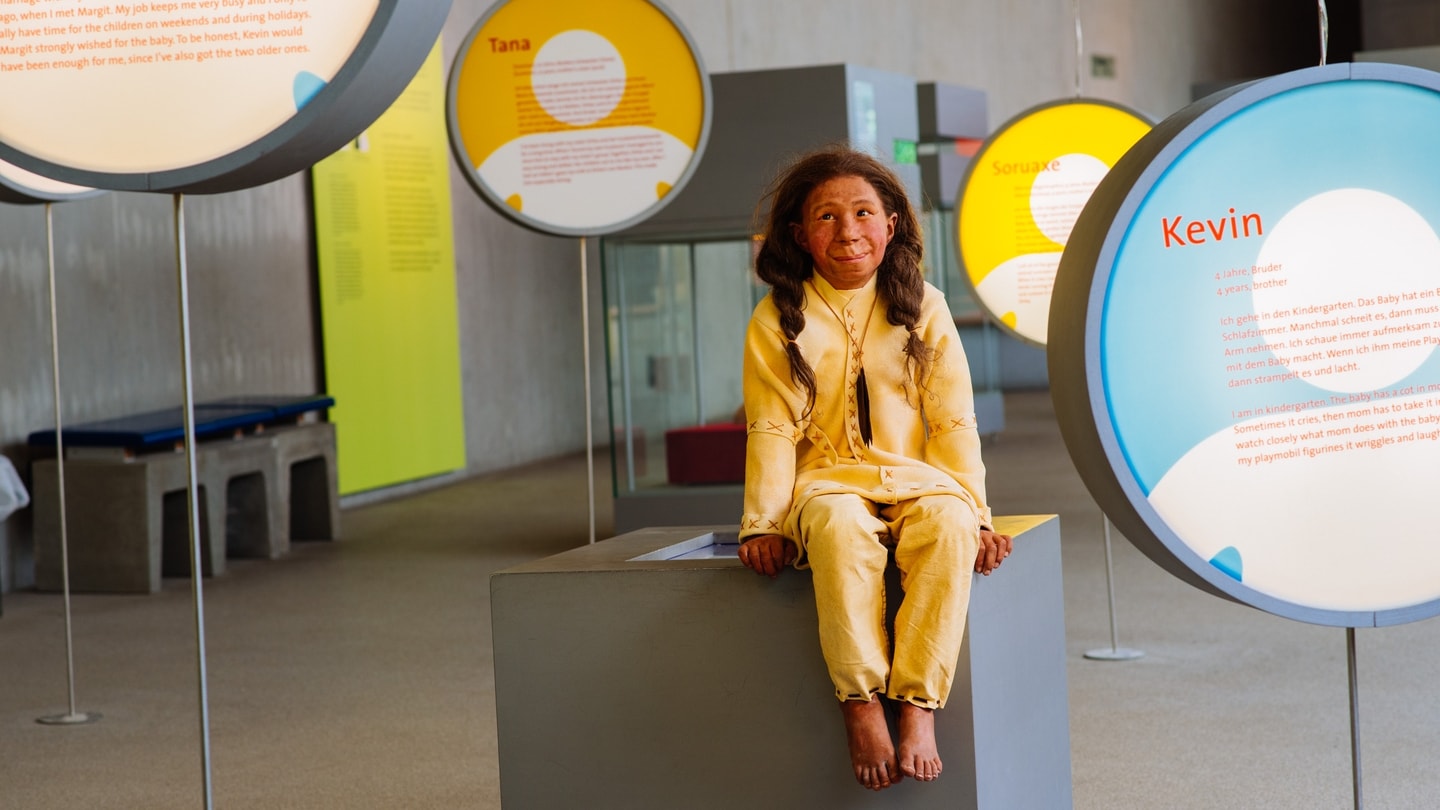
Compared to other species, all human infants are born prematurely. The child has to enter the world in a completely unfledged state so that its head can still pass through the birth canal. If it had to reach the same level of maturity as a chimpanzee baby it would still have to spend ten months in the womb.
As a result not only the care of the mother but also that of other participants is urgently required. They have to offer direct and indirect support for the child and its mother: They provide food and other resources, make available equipment and appliances and offer protection. Aside from the involvement of the male and other group members in the childcare, the role played by the grandmother is also a human invention. Collaborative care of the offspring began at the latest during the time of Homo erectus. The care for children led to the development of small but closely-knit groups.
Groups which go beyond the nuclear family are typical for human communities. The size of the smallest of these social units amongst hunters and gatherers around the world was approximately 25 individuals. Similar headcounts were confirmed by excavations of campgrounds from the Ice Age. These small groups were the foundation for our cultural development.
Through their exceptional resourcefulness humans have managed to establish an unimaginable diversity of family relationships and rules around the world. The present society is also subject to this dynamics.
“Patchwork Families“ for example are a new variation of the middle-class family.
All people alive today share a common maternal ancestor.
Deep within our cells lie traces of past generations. They allow researchers to trace relationships across thousands of years and reconstruct the story of our shared past.
This journey leads us to Africa, to our roots. Our shared ancestor reminds us that beyond all borders, cultures and differences lies a common origin, a connection that unites all eight billion people across every continent.
Understanding where we come from naturally leads to another question: Where are we going?